

You don’t need a perfect plan, a technical co-founder, or lots of money to start. You need a real problem, willingness to test assumptions, and a clear path.
Starting a startup in Germany can feel overwhelming—registration, funding, legalities, and validating demand can stall you. But startups begin with finding a problem worth solving, not registering a company.
Whether you’re a student in Berlin, an international founder in Germany, or leaving your job to pursue an idea, this guide takes you from first concept to first paying customers.
1. Start With a Problem, Not a Product
Most founders begin with an idea.
An app that makes life easier. A platform connecting two groups of people. A sustainable alternative to an existing product.
The excitement is understandable. But before spending months building something, ask yourself a more important question:
What problem am I actually solving, and for whom?
Strong startup ideas often emerge from observing frustrations, inefficiencies, or unmet needs in everyday life.
Maybe you've noticed that local businesses struggle to manage food waste. Perhaps international students find German bureaucracy unnecessarily complicated. Or you've experienced a problem in your own professional life that existing solutions fail to address.
These observations are starting points, not yet validated business opportunities.
Three questions to ask yourself
Who experiences this problem? Be specific. "Small businesses" is broad. "Independent restaurant owners in Berlin managing food waste" is a much clearer starting point.
How are they solving it today? Your competitors aren't necessarily other startups. They might be spreadsheets, WhatsApp groups, manual processes, or simply doing nothing.
Why would someone switch to your solution? Your product must offer a meaningful improvement in convenience, cost, speed, or outcomes.
Founder tip: Write your idea in one sentence:
"We help [specific audience] solve [specific problem] by [your proposed solution]."
If you struggle to complete that sentence, you may need to understand your target customers better before moving forward.
2. Validate Your Startup Idea Before Building Anything

One of the most expensive mistakes early-stage founders make is spending months developing a product without knowing whether anyone needs it.
The alternative is simple: talk to potential customers.
This is called startup validation, and it can begin long before you have a website, prototype, or registered company.
How to validate your startup idea
Step 1: Identify your target audience
Find 10 to 15 people who regularly experience the problem you're trying to solve.
Step 2: Conduct customer interviews
Instead of asking, "Would you use my app?", ask questions about actual experiences:
When did you last experience this problem?
What did you do to solve it?
How much time or money does it currently cost you?
What frustrates you about existing solutions?
Have you paid for anything to solve this problem before?
Avoid presenting your idea immediately. People are often polite about hypothetical products, particularly when speaking to an enthusiastic founder.
Step 3: Look for evidence, not compliments
Someone saying "That's a cool idea!" is encouraging, but it isn't validation.
More meaningful signals include people agreeing to a follow-up conversation, introducing you to a decision-maker, testing a prototype, or committing to a paid pilot.
Step 4: Test your riskiest assumption
Every startup idea depends on assumptions.
For example, you might assume that restaurant owners want to reduce food waste, that they will pay for a digital solution, and that employees will actually use it.
Identify the assumption most likely to make your business fail, then design a small experiment to test it.
Remember: your goal isn't to prove that your idea is brilliant. It's to discover what customers genuinely need.
3. Build a Minimum Viable Product (MVP)
Once you've identified a meaningful problem and found evidence of customer interest, it's time to test a solution.
But that doesn't mean building a complete product.
A Minimum Viable Product (MVP) is the simplest version of your solution that allows you to test an important assumption with real users.
Depending on your startup, your MVP might be:
A landing page explaining your service and collecting signups.
A clickable prototype showing how your product would work.
A manually delivered service that could eventually become automated.
A basic no-code application.
A small paid pilot with one or two customers.
Imagine you're developing an AI-powered scheduling assistant for freelancers.
Instead of spending six months building a sophisticated application, you could begin by offering a manually supported scheduling service to five freelancers.
You'll quickly learn whether the problem is important enough, how people want it solved, and which features actually matter.
Tools such as Figma, Webflow, Bubble, and other no-code platforms can help you test ideas without a large development budget.
The key is to resist unnecessary complexity.
Build only enough to learn what you need to learn next.
4. Find Your First Customers
This is where an idea begins to turn into a business.
Your first customers don't need to come from a large advertising campaign or a viral social media post.
In fact, early-stage startups often benefit from direct, personal outreach.
Five ways to find your first customers
1. Start with your customer interviews
If someone expressed a strong need during your initial research, invite them to test your solution.
2. Reach out directly
For a B2B startup, identify companies matching your ideal customer profile and contact relevant decision-makers with a personalized message.
3. Join communities where your customers already spend time
Depending on your audience, this might include professional associations, founder networks, university communities, industry events, or relevant online groups.
4. Offer a focused pilot
Rather than trying to sell a complete product, offer a clearly defined pilot with a specific outcome and timeframe.
5. Ask early customers for introductions
If your first users find genuine value in your product, ask whether they know someone facing the same challenge.
What counts as early traction?
Traction doesn't necessarily mean thousands of users or significant revenue.
For a startup at the idea stage, meaningful progress might be:
Completing 15 customer interviews that reveal a consistent problem.
Securing three serious pilot conversations.
Getting your first paying customer.
Demonstrating that customers repeatedly use your solution.
Receiving a referral from an early user.
The quality of these signals matters more than the numbers alone.
A hundred signups from people who never use your product may be less meaningful than five customers who repeatedly pay for it.
5. Register Your Startup in Germany
Once you're ready to conduct business, Germany has several legal structures to consider.
You don't necessarily need to incorporate a GmbH before researching your idea or testing a non-commercial prototype. However, you do need to understand when your activities require formal registration.
Common business structures in Germany
Legal structureMinimum capitalMain considerationSole proprietorship (Einzelunternehmen)NoneSimple to establish, but generally includes unlimited personal liabilityUG (haftungsbeschränkt)From €1 per shareholderLimited liability structure with relatively low initial capital, but ongoing administrative obligationsGmbH€25,000 share capitalEstablished corporate structure, with more formal requirements
A GmbH generally requires at least €12,500 of its €25,000 minimum share capital to be contributed before registration, subject to the applicable formation requirements. A UG can be formed with less capital, but €1 is rarely sufficient to operate a real business.
The right structure depends on your business model, liability risks, financing plans, co-founders, and expected activities.
Basic registration steps
1. Choose your legal structure. Consider your liability exposure, available capital, and whether you expect to raise investment.
2. Complete the appropriate registration. Commercial activities generally require registration with the local Gewerbeamt. Freelance activities classified as Freiberufler follow a different route through the tax office.
3. Register for tax purposes. Submit the Fragebogen zur steuerlichen Erfassung through ELSTER, generally within one month of starting the activity.
4. Set up your accounting and banking. A dedicated business bank account and reliable bookkeeping processes make financial management easier. Corporations have additional obligations.
5. Check industry-specific requirements. Some businesses require permits, professional qualifications, insurance, or compliance with sector-specific regulations. Founders from outside the EU should also check whether their residence status permits self-employment.
If you're unsure which legal structure is appropriate, consult a qualified tax adviser or legal professional before incorporating.
You can find official guidance through the German Federal Government's startup portal and Make it in Germany.
6. Explore Startup Funding in Germany
One of the advantages of building a startup in Germany is the range of public support programs, university initiatives, and startup accelerators available.
But funding isn't always the first thing your startup needs.
Before looking for investors, understand what you're actually trying to finance.
Do you need money to build a prototype? Cover living expenses while developing your idea? Hire employees? Or reach your first paying customers?
Different funding options serve different purposes.
Startup funding options worth exploring
EXIST Startup Grant
The EXIST Startup Grant supports eligible students, graduates, and researchers developing innovative, knowledge-based businesses.
It can provide financial support and access to coaching and university resources during the pre-founding phase. Eligibility requirements apply, including the status of the proposed business and its connection to a university or research institution.
Learn more at exist.de.
Regional startup support programs
Germany's federal states and municipalities offer a variety of startup initiatives. Depending on your location and eligibility, these may include grants, advisory programs, subsidized services, or access to founder networks.
Startup accelerators and incubators
Accelerators provide structured programs to help founders develop their businesses through mentoring, workshops, accountability, and access to relevant networks.
Some require equity or charge fees. Others are publicly funded and free for eligible founders.
Angel investors and venture capital
Equity financing can be appropriate for startups with significant growth potential, but it isn't necessarily suitable for every early-stage business.
Raising investment also involves ownership dilution, additional expectations, and fundraising work.
Do you actually need funding yet?
If you can validate your idea, develop a basic MVP, and acquire your first customers with limited resources, you may be able to delay outside financing.
That can give you a stronger position when you eventually approach investors.
Sometimes the most valuable early support isn't money. It's access to experienced people who help you avoid expensive mistakes.
7. Find the Right Startup Community
Building a startup can be isolating, especially when you're working alone or navigating entrepreneurship for the first time.
A strong founder community can provide something that's difficult to obtain from online tutorials: honest feedback from people facing similar challenges.
Berlin offers access to startup events, coworking spaces, university entrepreneurship centers, professional networks, and accelerator programs.
But attending networking events alone won't necessarily move your business forward.
Look for environments that help you develop your skills, meet potential customers, and stay accountable for concrete milestones.
Should you join a startup accelerator?
An accelerator may be particularly valuable if you're struggling with questions such as:
Is my startup idea actually viable?
How do I turn customer feedback into a product?
What should I prioritize in the next few weeks?
How do I find my first paying customers?
How do I build a viable business model?
How do I communicate my idea to partners or investors?
The right accelerator provides more than inspirational talks. It should help you turn insights into action.
From idea to traction with NXTLX
At NXT LEVEL ACCELERATOR (NXTLX), we help early-stage, impact-driven founders move from ideas toward real-world validation and traction.
Our fully funded, 10-week startup accelerator combines practical workshops, personalized mentoring, and a community of founders who are actively building their ventures.
You don't need an established company, a finished product, or existing revenue to be considered.
We welcome solo founders and teams based in Germany who are developing ideas with a positive social or community-oriented purpose.
The program is designed around one principle: progress comes from doing, testing, learning, and improving.
Explore the NXTLX Accelerator and join the next batch waiting list →
8. Your First 10 Weeks: A Practical Startup Roadmap
Starting a startup becomes much more manageable when you break the process into smaller milestones.
Here's an example of how your first 10 weeks could look.
WeekYour focusExpected outcome1Define the problemClear target audience and problem statement2Interview potential customersFirst evidence of customer needs3Analyze the marketUnderstanding of alternatives and competitors4Define your value propositionClear explanation of why customers should choose you5Design your MVPTestable solution or prototype6Test with real usersFeedback on your solution7Explore your business modelInitial pricing and revenue assumptions8Approach potential customersPilot discussions or first sales opportunities9Improve your product and pitchRefined offering based on evidence10Evaluate traction and plan aheadClear priorities for the next stage
This is an illustrative founder roadmap, not a fixed NXTLX program curriculum. Actual progress will depend on your business, industry, starting point, and the evidence you gather.
For some startups, the first 10 weeks may produce paying customers. Others may discover that their original concept needs a fundamental change.
Both can represent meaningful progress.
The objective isn't to launch a perfect company in 10 weeks.
It's to replace uncertainty with evidence and make better decisions about what comes next.
9. Common Mistakes First-Time Founders Make
Starting a company involves uncertainty, but several common mistakes are avoidable.
Building too much before talking to customers. A beautiful product doesn't matter if it solves a problem nobody considers important.
Waiting for the perfect co-founder. A co-founder can bring complementary skills, but many early-stage activities can begin independently.
Confusing social media attention with demand. Likes and impressions don't automatically translate into purchases.
Seeking investment before demonstrating value. Investors generally want to understand the problem, market, team, and evidence that your solution could work.
Getting stuck in administration too early. Legal and tax compliance are essential, but founders should distinguish necessary formalities from work that can wait until the business requires it.
Trying to figure everything out alone. Feedback from customers, mentors, and other founders can help identify weaknesses before they become expensive problems.
Above all, avoid assuming that entrepreneurship follows a perfectly linear path.
Most successful startup journeys involve experimentation, uncertainty, setbacks, and changes in direction.
Frequently Asked Questions About Starting a Startup in Germany
Can I start a startup in Germany without money?
You can begin researching and validating many startup ideas with little financial investment. Customer interviews, basic prototypes, and early market research often require more time than money.
However, formally establishing and operating a company may involve registration, accounting, insurance, legal, and other costs.
Do I need to speak German to start a startup in Germany?
Not necessarily. Many startups operate primarily in English, particularly within international ecosystems such as Berlin.
However, official administrative procedures and legal documentation may require German-language communication. Language requirements also depend on your customers and industry.
Can foreigners start a startup in Germany?
Yes, although the applicable residence and immigration requirements depend on nationality and immigration status. EU citizens generally benefit from freedom of establishment, while non-EU founders may need an appropriate residence permit authorizing self-employment.
Do I need a co-founder?
No. You can develop and validate a startup idea as a solo founder. A co-founder may be valuable when complementary expertise, shared responsibility, or additional execution capacity is important.
Do I need a GmbH to start a startup?
Not always. Germany offers several business structures. The best option depends on your circumstances, including liability, taxation, investment plans, and operational needs.
How long does it take to start a startup?
You can begin researching and validating an idea immediately. Formal business registration, product development, and customer acquisition vary significantly depending on the business.
An intensive 10-week period can be enough to make substantial early progress, but it doesn't guarantee a finished product or paying customers.
Are there free startup accelerator programs in Germany?
Yes. Some startup accelerators are publicly funded and offer eligible founders support without participation fees or an equity requirement.
NXTLX is one example, offering a fully funded 10-week program for early-stage, impact-driven founders based in Germany.
Final Thoughts: Start Before You Feel Ready
Starting a startup in Germany doesn't require having every answer from day one.
You don't need a sophisticated product, a large team, or a polished investor presentation to begin.
What you need is curiosity, a willingness to challenge your assumptions, and the discipline to take the next step.
Talk to potential customers. Test your solution. Learn from feedback. Improve what you're building.
And surround yourself with people who will challenge and support you along the way.
Your startup doesn't begin when everything is ready. It begins when you start turning an idea into evidence.
Ready to Take Your Startup to the Next Level?
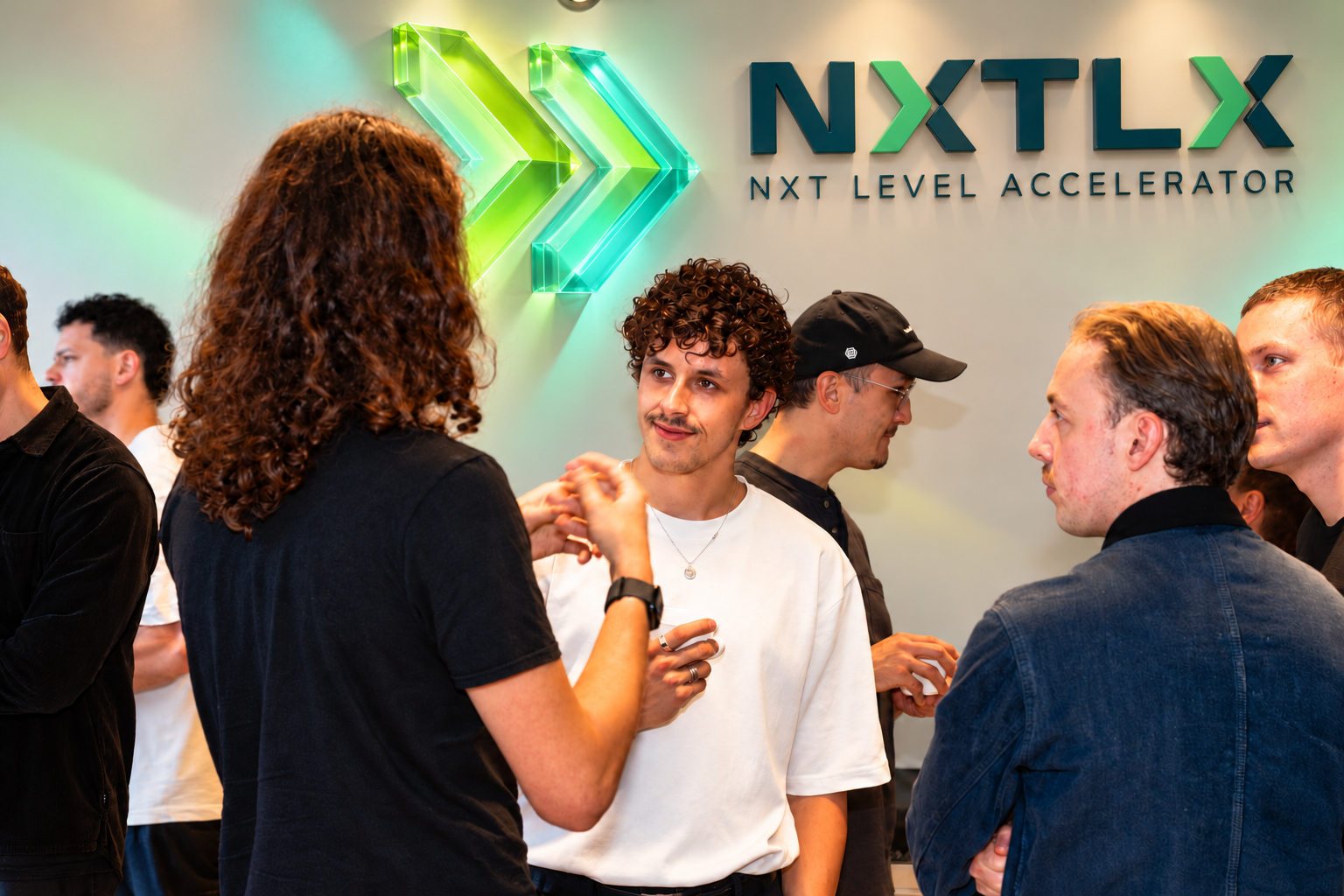
If you're an early-stage founder in Germany building a business with a positive impact, the NXT LEVEL ACCELERATOR could help you take the next step.
Join a community of founders, learn from experienced mentors, and work toward meaningful progress during our fully funded 10-week sprint.
